


Eye twitching causes are usually linked to fatigue, stress, caffeine and screen use. This common eyelid movement is called myokymia. It is usually benign, but twitching that spreads to the face, closes the eye or lasts for weeks needs assessment by an eye specialist.
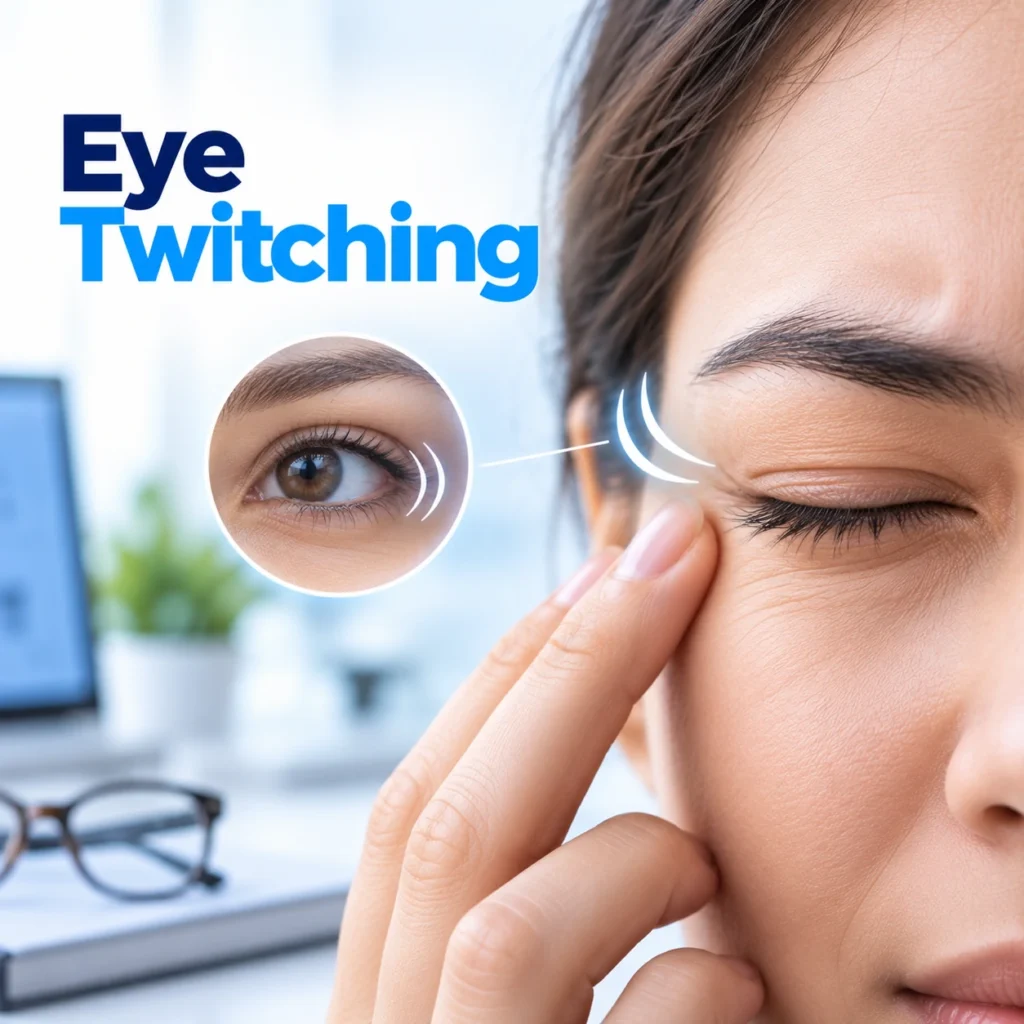
What Are the Common Eye Twitching Causes?
Eyelid twitching is an involuntary movement of the eyelid. It is also described as eye fluttering and is often noticed around the lower or upper eyelid.
The most common eye twitching causes listed in the clinical guidance include:
- Fatigue
- Stress
- Caffeine
- Screen use
These factors are linked to myokymia, which is usually benign. In many cases, the twitching is temporary.
However, the pattern of the twitch matters. If the movement changes or continues for a long time, you should have it assessed rather than assuming the cause.
Eye Twitching Causes and When to See an Eye Specialist
Most simple eyelid twitching does not signal a serious eye problem. However, certain changes mean you should arrange an assessment.
You should seek an eye examination if your eyelid twitching:
- Spreads to other parts of the face
- Causes the eye to close
- Lasts for weeks
These are specific reasons to have the twitch assessed.
An ophthalmologist is a medical doctor who diagnoses and treats eye diseases. An optometrist assesses vision and helps with glasses or contact lenses.
A specialist examination can help determine whether the twitching is simply myokymia or whether another issue needs attention.
How Do Screens, Stress and Fatigue Affect Eye Twitching?
Prolonged screen use is associated with dry eye and eye strain because blink rate falls. Regular breaks, adequate lighting and the correct working distance reduce symptoms.
Screen use is therefore one factor to consider among the common eye twitching causes. Fatigue and stress are also linked to eyelid twitching.
Caffeine is another recognised factor. If you notice recurring eye fluttering, consider the pattern and whether it occurs alongside fatigue, stress, caffeine intake or prolonged screen use.
These observations do not provide a diagnosis. They can, however, be useful information to share during an eye examination.
Simple habits that may reduce symptoms
For screen-related eye strain, regular breaks can help. Adequate lighting and the correct working distance are also recommended.
The aim is to reduce factors associated with eye strain while watching for changes in the twitch itself.
When Is Eye Twitching a Sign of a Problem?
The pattern of the twitch is important. A twitch that spreads to the face, causes the eye to close, or lasts for weeks needs assessment.
You should also seek prompt eye care if twitching occurs alongside significant changes in vision.
Most sudden changes in vision need examination rather than home management. Pain with redness and reduced vision is always a reason for same-day assessment.
New floaters with flashes of light, a curtain across vision, or sudden double vision also need urgent examination rather than waiting.
Sudden painless loss of vision in one eye is an emergency. It can indicate retinal detachment, retinal vascular occlusion or optic nerve disease.
These symptoms are not something you should try to diagnose yourself.
What Other Eye Problems Can Cause Concern?
Not every eye symptom is caused by eyelid twitching. Other common eye problems have different features and require different approaches.
Eye flu
Viral conjunctivitis, commonly called eye flu, spreads through contact. Typical features include redness, watering, grittiness and discharge.
Hand hygiene and not sharing towels limit the spread. Antibiotic drops do not treat viral conjunctivitis.
Self-medication with steroid drops can be harmful. Steroid drops should never be started without examination.
Stye and eyelid lumps
A stye is an infection of an eyelid gland that causes a painful lump. Warm compresses and lid hygiene are the usual first measures.
A painless, persistent lump is more likely to be a chalazion. An examination is appropriate when an eyelid lump persists or you are unsure what it represents.
If you are also experiencing changes in your eyesight, read about signs you need glasses.
How Is Eye Twitching Assessed?
An eye examination helps assess your symptoms and determine whether further evaluation is needed.
Your symptoms, their duration and their pattern are relevant. A twitch that lasts for weeks, spreads to the face or causes the eye to close should not simply be ignored.
If other vision symptoms are present, they should also be reported. Most sudden changes in vision need examination rather than home management.
Thind Eye Hospital provides multi superspeciality eye care through branches in Jalandhar, Ludhiana, Hoshiarpur and Pathankot.
The hospital was founded in 1991 by Dr. Jaswant Singh Thind, Chairman cum Managing Director, after he completed his MS from King George’s Medical College, Lucknow, in 1986. The hospital brings more than 39 years of expertise in eye care.
For concerns involving the eyelids, orbit or neuro-ophthalmology, Dr. Apoorva Mittal, Oculoplastics, Orbit and Neuro-Ophthalmologist, consults at the Jalandhar branch. You can learn more about Dr. Apoorva Mittal.
Why Choose Thind Eye Hospital for Eye Care?
Thind Eye Hospital has been providing eye care since 1991. It sees more than 1,00,000 patients every year and has performed more than 4,00,000 surgeries to date.
The hospital launched a fully equipped Vitreo-Retinal department in 1999. It was also the first eye hospital in North India to introduce LASIK laser vision correction in 1998.
These are part of the hospital’s history of eye care services and developments.
The hospital also conducts community eye care camps for rural populations and school eye health checkup programmes for children. It has a standing policy that eye treatment is never denied to a needy person.
The American Academy of Ophthalmology provides authoritative information about eye health. The National Programme for Control of Blindness and Visual Impairment also provides information relevant to eye care in India.
What Should You Do About Eye Twitching?
If your eye twitching is linked with fatigue, stress, caffeine or screen use, monitor the pattern and reduce factors associated with eye strain.
However, twitching that spreads to the face, causes the eye to close or lasts for weeks needs assessment. Do not ignore sudden changes in vision, pain with redness and reduced vision, new floaters with flashes, a curtain across vision or sudden double vision.
If you want your symptoms assessed, you can book an appointment with Thind Eye Hospital.
Understanding your eye twitching causes can help you recognise when routine care is appropriate and when an examination is needed.
This article provides general information about eye health and eye care services. It is not medical advice and does not replace a consultation with a qualified ophthalmologist. Symptoms vary between individuals. Please consult a licensed eye specialist before acting on any information here.
FAQs