

Eye swelling treatment depends on what is causing the swelling. A swollen eyelid can result from an eyelid gland blockage, tear drainage problems or conditions affecting the tissues around the eye. Some changes need prompt assessment, especially a growing eyelid lump, lash loss, trauma or sudden changes in vision.
What Are the Common Causes of Swollen Eyelids?
A swollen eyelid does not always have the same cause. The location, duration and other symptoms help an ophthalmologist assess what is happening.
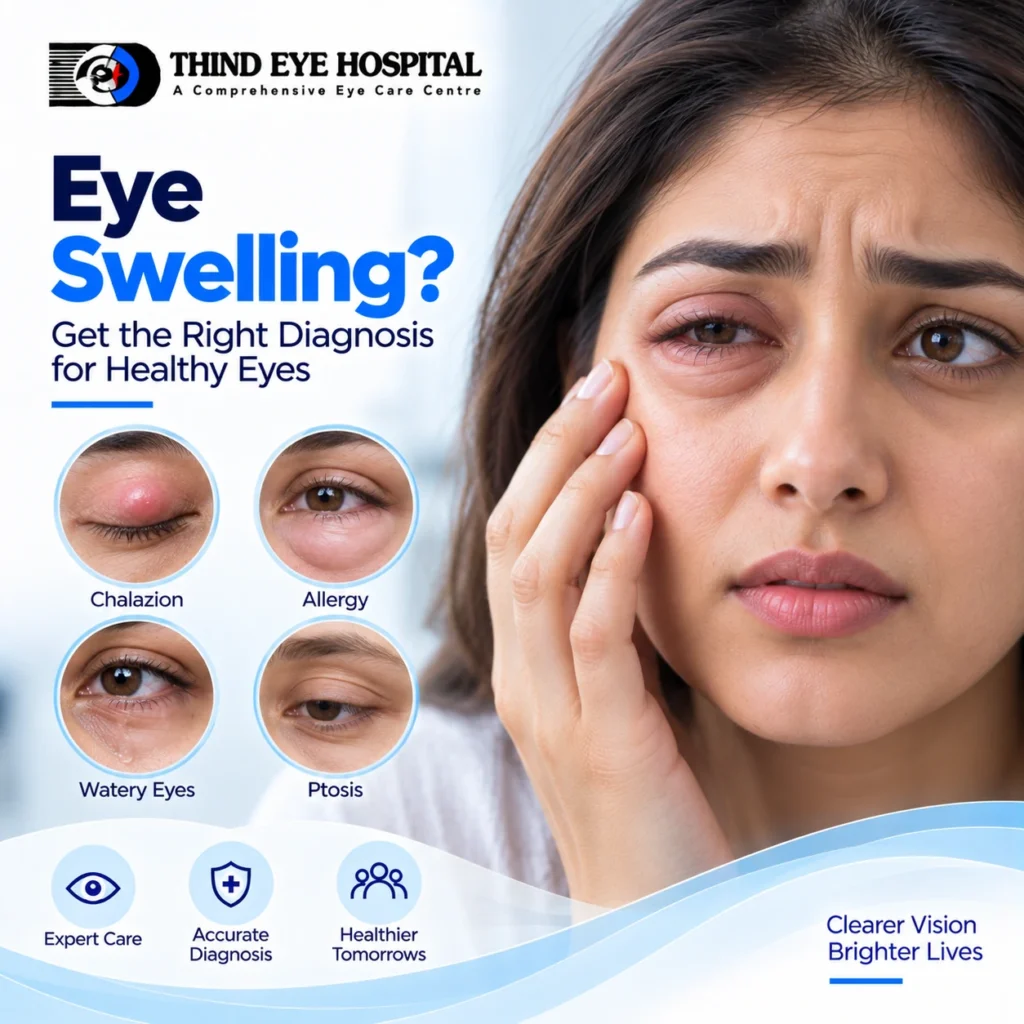
One common cause is a chalazion. A chalazion is a blocked, usually painless eyelid gland swelling. Warm compresses are the first measure, while a persistent lump may need a minor procedure.
Watering can also occur alongside eye swelling. In adults, watering eyes can result from blocked tear drainage or dry eye. An examination is needed rather than assuming the cause.
This is why eye swelling treatment should begin with an appropriate assessment instead of treating every swollen eyelid in the same way.
Eye Swelling Treatment for Different Eyelid Problems
The approach to eye swelling treatment depends on the problem found during examination.
Chalazion
A chalazion is a blocked eyelid gland that usually causes a painless swelling. Warm compresses are the first measure.
If the lump persists, a minor procedure may be needed. Persistent eyelid swelling should therefore be assessed rather than ignored.
Ptosis
Ptosis means a drooping upper eyelid. In children, it can obstruct visual development and needs early assessment.
In adults, ptosis is more often age related. An ophthalmologist can assess the eyelid and determine whether further management is required.
Watering eyes
Excessive watering does not always mean that the eyes are producing too many tears. Blocked tear drainage and dry eye can both cause watering in adults.
This is another reason why eye swelling treatment should follow an examination when swelling and watering occur together.
When Does Eye Swelling Treatment Need Prompt Assessment?
Some eyelid changes should not simply be observed at home.
A rapidly growing eyelid lump needs assessment. The same applies to a lump associated with lash loss or an ulcerating lesion.
Trauma around the eyelid or orbit also needs prompt assessment. The orbit is the bony socket around the eye. Damage to the tear drainage system is easier to repair when assessed early.
These signs do not establish a diagnosis by themselves. They are reasons to seek an eye examination.
If you are also experiencing other changes in your vision, information about vision changes after 60 may be useful, particularly for older adults.
Eye Swelling Treatment and Thyroid Eye Disease
Thyroid eye disease is another condition that can affect the tissues around the eyes. It can cause prominence of the eyes, lid retraction and double vision.
In severe cases, thyroid eye disease can put pressure on the optic nerve. The optic nerve carries visual information from the eye towards the brain.
These symptoms need an eye assessment. Eye swelling treatment is not based on swelling alone because conditions affecting the orbit can have different clinical features.
An ophthalmologist can examine the eyes and surrounding structures when these changes occur.
What Does an Oculoplastic Specialist Treat?
Oculoplastic surgery deals with the eyelids, tear drainage system and orbit. It combines eye care with assessment of structures surrounding the eye.
At Thind Eye Hospital, Dr. Apoorva Mittal is an Oculoplastics, Orbit and Neuro-Ophthalmologist. Dr. Apoorva Mittal consults at the Jalandhar branch.
Neuro-ophthalmology deals with the connection between the eye and brain. This includes optic nerve disease, sudden double vision and unexplained visual field loss.
This area of care is relevant when swelling or eyelid changes occur alongside symptoms involving vision, eye movement or the visual field.
For reliable general information about eye conditions, you can also refer to the American Academy of Ophthalmology and the World Health Organization’s eye care information.
What Should You Do About Eye Swelling?
If you have a swollen eyelid, avoid assuming the cause from appearance alone. A persistent lump, rapidly growing swelling, lash loss or an ulcerating lesion needs assessment.
Eyelid or orbital trauma also needs prompt assessment. Watering with swelling should be examined because both blocked tear drainage and dry eye can cause watering.
For eye swelling treatment, you can book a consultation with the appropriate eye specialist. You can book an appointment at Thind Eye Hospital.
If your symptoms include eyelid swelling, watering or other changes around the eye, seek an examination rather than relying on self-treatment. The right eye swelling treatment starts with identifying the clinical problem.
This article provides general information about eye health and eye care services. It is not medical advice and does not replace a consultation with a qualified ophthalmologist. Symptoms vary between individuals. Please consult a licensed eye specialist before acting on any information here.