

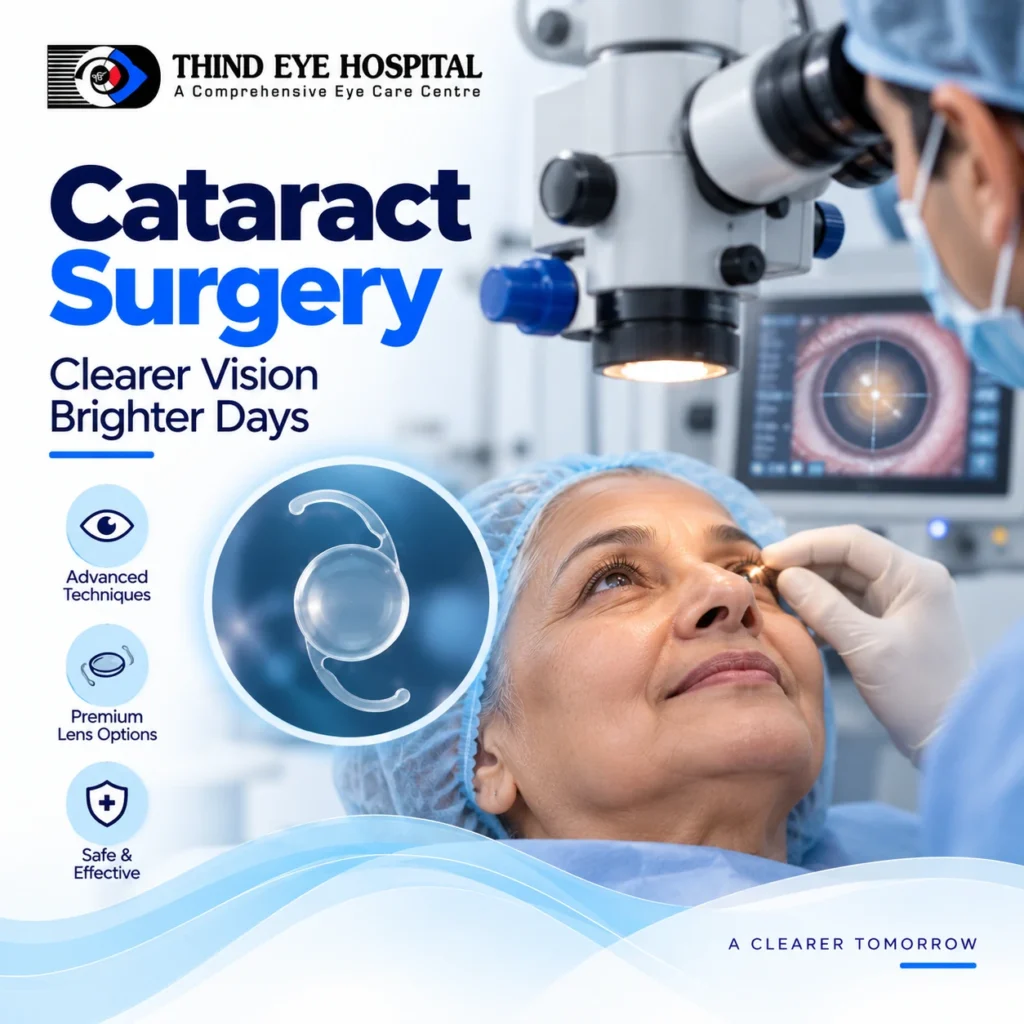
Cataract surgery in Ludhiana removes the clouded natural lens of the eye and replaces it with an intraocular lens (IOL). Surgery is the only definitive treatment for cataract. Common techniques include phacoemulsification and small incision cataract surgery (SICS), followed by recovery over the next few weeks.
What Is a Cataract?
A cataract is a clouding of the eye’s natural lens. It develops gradually and is most commonly related to ageing.
Common symptoms include:
- Cloudy or blurred vision
- Glare and haloes around lights
- Poor night vision
- Faded colours
- Frequent changes in spectacle power
If these symptoms are affecting your daily activities, an eye examination can determine whether cataract is present and whether surgery should be considered.
Cataract cannot be reversed with drops, exercises or diet. Cataract surgery in Ludhiana is the definitive treatment when a cataract requires surgery.
If you are unsure whether your symptoms relate to spectacle power, you can also review the signs you need glasses.
Cataract Surgery in Ludhiana: Which Technique Is Used?
Modern cataract surgery in Ludhiana removes the clouded lens and replaces it with an intraocular lens, commonly called an IOL.
Two common surgical techniques are:
Phacoemulsification
Phacoemulsification removes the clouded lens through a cataract surgery technique designed for lens removal. An IOL is then placed inside the eye.
Small Incision Cataract Surgery
Small incision cataract surgery, or SICS, is another established technique for removing the cloudy natural lens and replacing it with an IOL.
The appropriate technique is selected after assessing the eye and the patient’s surgical requirements.
Thind Eye Hospital introduced 100% topical anaesthesia cataract surgery without injections in 1997. It also introduced 100% blade-free cataract surgery with laser in 2013.
What IOL Options Are Available?
An intraocular lens replaces the natural lens removed during cataract surgery. Different IOL options are available for different visual needs.
These include:
- Monofocal lenses, designed for a single main focus
- Toric lenses, used for eyes with astigmatism
- Multifocal lenses
- Extended depth of focus lenses
The choice depends on your eye measurements and visual needs. A proper assessment is therefore needed before selecting an IOL.
For more detail about what happens after the procedure, you can read about cataract surgery recovery time.
Cataract Operation Ludhiana: What Is Recovery Like?
Most cataract operation Ludhiana patients notice improved vision within a few days. Vision continues to settle over about four to six weeks.
Cataract surgery is usually performed under topical or local anaesthesia as a day care procedure. General anaesthesia is rarely needed in adults.
Your recovery instructions are based on your individual examination and surgery. Follow the instructions given by your eye specialist during the recovery period.
There is no upper age limit for cataract surgery. Fitness for surgery depends on the health of the eye and your general medical condition, rather than age alone.
What should you expect after surgery?
Vision can improve within the first few days, but it continues to settle over the following weeks. The final recovery period is not the same as the first few days of visual improvement.
This distinction is useful when planning work, travel and other activities after cataract surgery in Ludhiana.
Motiyabind Ludhiana: When Should You Consider Surgery?
People searching for motiyabind Ludhiana are often looking for information about cataract symptoms and treatment.
Cataract develops gradually. Cloudy vision, glare, haloes, poor night vision, faded colours and frequent spectacle power changes are common symptoms.
Cataract does not improve through eye exercises, diet or eye drops. Surgery is the definitive treatment for cataract.
An examination is needed to assess the cataract and the overall health of the eye. This is also when your specialist can discuss the surgical technique and IOL options.
Cataract Surgery in Ludhiana at Thind Eye Hospital
Thind Eye Hospital is a multi superspeciality eye hospital with branches in Jalandhar, Ludhiana, Hoshiarpur and Pathankot.
The Ludhiana branch is located at:
B-35, 958, M/5, Wood Stock Tower, Ferozepur Road, Ludhiana 141012, Punjab
Landmark: Wood Stock Tower, Ferozepur Road, opposite Wave Mall
Opening hours: Monday to Sunday, 8:00 am to 8:00 pm
Phone: +91 95940 50391
Dr. Alia Yamin is a Consultant Ophthalmologist specialising in cataract, medical retina and dry eye. She has an MBBS and MS Ophthalmology qualification and consults in Ludhiana daily. She is experienced in SICS and phacoemulsification cataract surgery.
You can learn more about Dr. Alia Yamin before your consultation.
Dr. Dinesh Kumar is a Consultant Ophthalmologist specialising in retina, vitreoretinal surgery and cataract surgery. He also consults in Ludhiana daily.
Thind Eye Hospital was founded in 1991 by Dr. Jaswant Singh Thind, Chairman cum Managing Director. The hospital brings more than 39 years of expertise in eye care and has performed more than 4,00,000 surgeries to date.
For additional patient information, the American Academy of Ophthalmology provides educational resources on cataract and eye care. The World Health Organization’s eye care information also provides information about vision and eye health.
What Should You Do Next?
If cloudy vision, glare, poor night vision or frequent changes in spectacle power are affecting you, arrange an eye examination.
For cataract surgery in Ludhiana, you can visit Thind Eye Hospital at Wood Stock Tower, Ferozepur Road, opposite Wave Mall.
Call +91 95940 50391, Monday to Sunday, 8:00 am to 8:00 pm, or book an appointment.
Choosing cataract surgery in Ludhiana starts with a proper examination, followed by discussion of the suitable surgical technique, IOL option and expected recovery.
This article provides general information about eye health and eye care services. It is not medical advice and does not replace a consultation with a qualified ophthalmologist. Symptoms vary between individuals. Please consult a licensed eye specialist before acting on any information here.