

The best contact lens depends on your vision needs, eye health and daily routine. Contact lens types differ in how they correct vision and how they are worn. Safe use also requires proper fitting, hygiene and contact lens care. An eye examination helps determine whether contact lenses are suitable for you.
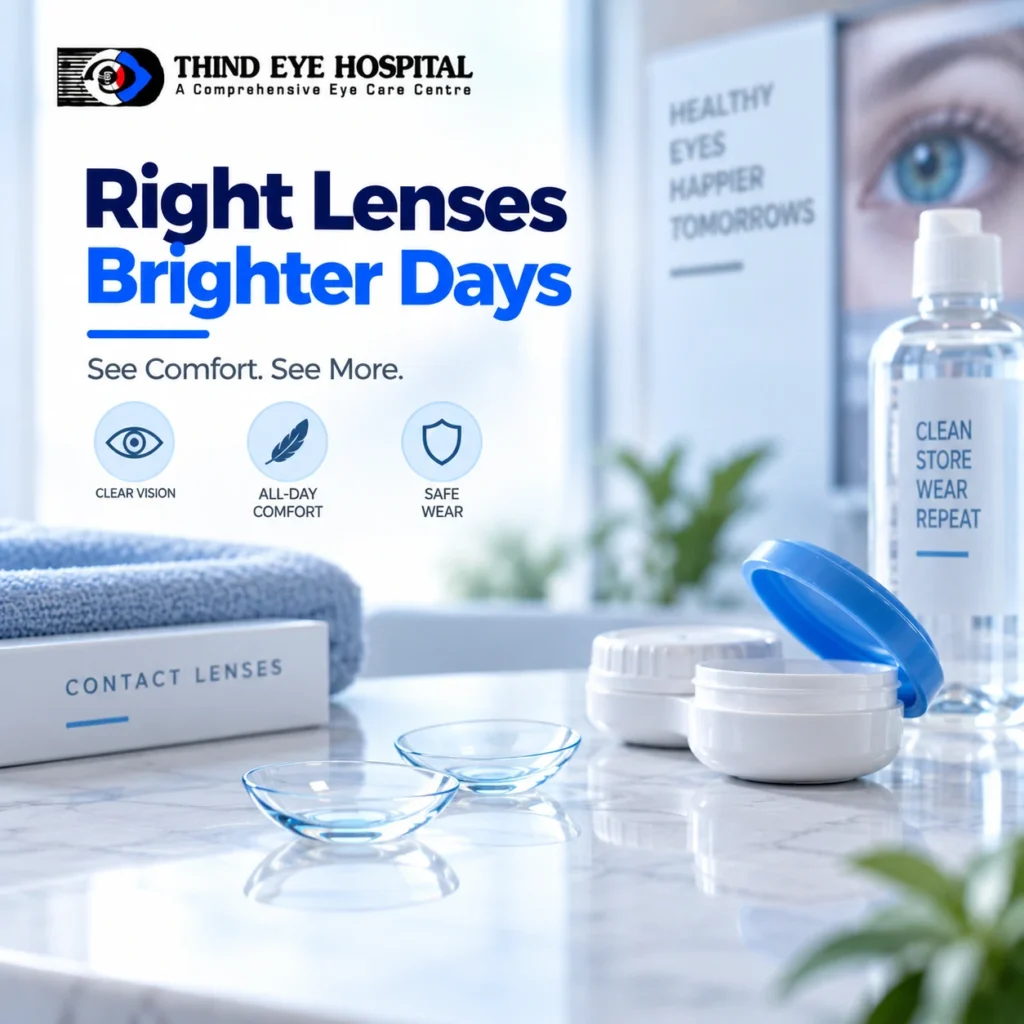
What Are the Main Contact Lens Types?
There are several contact lens types, and each serves different vision needs. Your choice should follow an eye examination rather than a decision based only on convenience.
Contact lenses are designed to sit on the eye and provide vision correction. The right lens needs to match your prescription and eye health.
When comparing the best contact lens for your needs, consider:
- Your current vision prescription
- Your daily wearing routine
- Your eye health
- Any history of corneal problems
- Whether you experience dry eye symptoms
- How consistently you can follow lens-care instructions
An ophthalmologist is a medical doctor specialising in eye health and treatment. An optometrist is a vision-care professional who examines vision and provides optical correction within their professional scope.
Best Contact Lens: What Should You Consider?
Choosing the best contact lens involves more than selecting a brand or lens type.
Your cornea matters
The cornea is the clear front surface of the eye. Its shape and clarity determine much of the eye’s focusing power.
Some corneal conditions require specialist assessment before contact lens use. Keratoconus, for example, is a progressive thinning and bulging of the cornea. It usually starts in the teens or twenties and can cause distorted vision and frequently changing spectacle power.
Persistent eye rubbing is a recognised risk factor for keratoconus.
Dry eye also matters
Dry eye is a common condition of the tear film. It can cause burning, grittiness, watering and fluctuating vision.
If you experience these symptoms, an eye examination can assess your tear film and overall eye health before you choose contact lenses. Management can include lubricants, lid hygiene, tear film assessment and treatments such as IDRA assessment and IRPL therapy.
You can also read about eye allergy treatment if allergy-related eye symptoms are affecting your comfort.
Contact Lens Care: The Safety Basics
Good contact lens care is essential for people who wear lenses.
Contact lens misuse is one recognised cause of corneal ulcers. A corneal ulcer is an open sore on the cornea and requires prompt assessment.
Know the warning signs
Pain, redness, watering and a white spot on the cornea need same-day assessment. Delaying assessment can cause permanent scarring.
Do not continue treating these symptoms as a routine lens problem. Seek an eye examination promptly.
Reduce avoidable irritation
If you use contact lenses, follow the care and wearing instructions given for your lenses. Avoid persistent eye rubbing, particularly because it is a recognised risk factor for keratoconus.
If you develop new or persistent symptoms while wearing lenses, arrange an eye examination rather than trying to diagnose the problem yourself.
The American Academy of Ophthalmology provides additional information about contact lenses and eye health.
Contact Lenses and Corneal Conditions
Your contact lens choice becomes especially important if you have a known corneal condition.
Keratoconus
Collagen crosslinking, or CXL, is used to strengthen corneal tissue and slow the progression of keratoconus. It does not usually reverse changes that are already present.
CAIRS and corneal ring segments can help improve corneal shape in selected keratoconus patients.
Corneal transplantation
Some corneal conditions require transplantation. Techniques include penetrating keratoplasty, or PK, and lamellar procedures such as DALK and PDEK. Lamellar techniques replace only the affected layers.
These treatments are different from routine contact lens correction and require specialist assessment.
Pterygium
Pterygium is a fleshy growth on the surface of the eye. It is associated with sun, wind and dust exposure.
It is removed surgically when it affects vision or causes persistent irritation. Sunglasses with proper UV protection are also relevant in the Punjab climate because ultraviolet exposure is linked to cataract and pterygium.
Best Contact Lens for Dry or Allergy-Prone Eyes
There is no single best contact lens for everyone with eye discomfort. Your symptoms should first be assessed.
Dry eye can cause burning, grittiness, watering and fluctuating vision. Contact lens use can also become problematic if proper care is not followed.
If you experience eye symptoms that you think are related to allergy, you can read more about eye allergy treatment.
A proper examination can also check the cornea and other parts of the eye. This matters because corneal ulcers can follow injury, contact lens misuse or infection.
If you have pain, redness, watering and a white spot on the cornea, seek same-day assessment.
When Should You See an Eye Specialist?
A comprehensive eye examination assesses more than spectacle power. It includes visual acuity, refraction, examination of the front of the eye, intraocular pressure and, where indicated, a dilated retinal examination.
Regular examinations are also relevant even when your vision appears normal. Adults without symptoms or risk factors are generally advised to have a comprehensive eye examination every one to two years.
From age 40, examinations are advised more often as the risk of glaucoma and other conditions rises.
People with diabetes need a dilated retinal examination at least once a year, and sooner if advised, even when their vision seems normal. Anyone with a family history of glaucoma should also be examined regularly from an earlier age.
For additional eye-care information, you can refer to the National Programme for Control of Blindness and Visual Impairment.
Contact Lens Consultation at Thind Eye Hospital
If you are searching for the best contact lens, start with an eye examination. The assessment can check your vision, cornea, eye surface and general eye health.
At Thind Eye Hospital, Dr. Diksha, Consultant Ophthalmologist, Cornea and Refractive Surgery, consults in Ludhiana daily. Her speciality includes cornea, cataract and refractive surgery, including LASIK, SMILE and PRK.
Dr. Diksha is also experienced in managing corneal ulcers and dry eye, along with procedures including collagen crosslinking, CAIRS and corneal transplant techniques.
You can learn more about Dr. Diksha before your consultation.
Thind Eye Hospital is a multi superspeciality eye hospital with branches in Jalandhar, Ludhiana, Hoshiarpur and Pathankot. The hospital was founded in 1991 by Dr. Jaswant Singh Thind and brings more than 39 years of expertise in eye care.
What Should You Do Next?
The best contact lens is one selected after considering your prescription, corneal health, eye surface and daily needs. Good contact lens care is equally important after you start wearing lenses.
If you are considering contact lenses or experiencing discomfort, book an eye examination with Thind Eye Hospital. You can book an appointment and discuss your requirements with an eye specialist.
Disclaimer: “This article provides general information about eye health and eye care services. It is not medical advice and does not replace a consultation with a qualified ophthalmologist. Symptoms vary between individuals. Please consult a licensed eye specialist before acting on any information here.”