


An intravitreal injection delivers medicine into the vitreous, the gel-like part inside the eye. It is used for certain retinal conditions, including diabetic retinopathy. Anti-VEGF and Ozurdex are examples of medicines used through intravitreal injections. The treatment plan follows a retinal examination and the condition being treated.
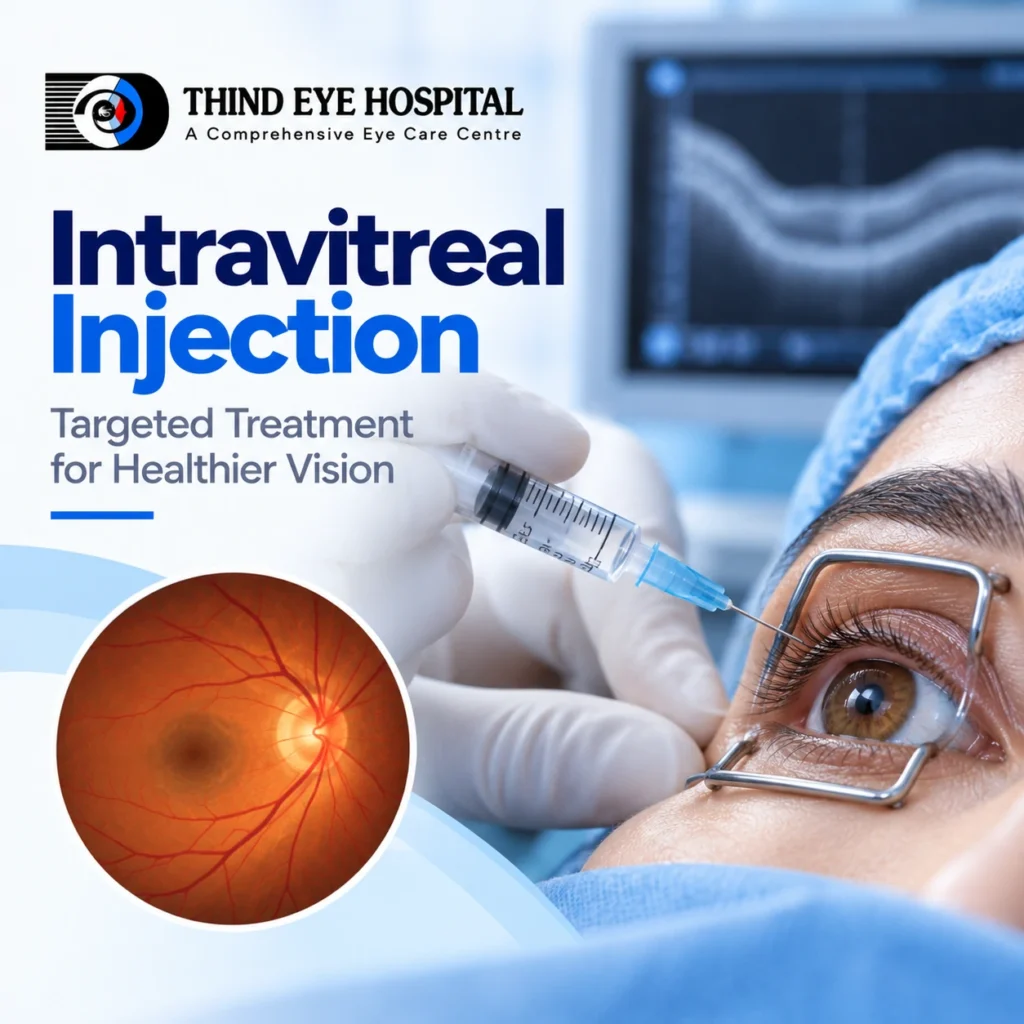
What Is an Intravitreal Injection?
An intravitreal injection is an eye injection for retina conditions. The medicine is delivered into the vitreous, allowing retinal specialists to treat certain retinal diseases.
The retina is the light-sensitive layer at the back of your eye. Retinal disease is a leading cause of vision loss and often develops without pain.
An anti VEGF injection is one type of intravitreal treatment. Ozurdex is another intravitreal medicine listed among treatment options for retinal disease.
Intravitreal injections are one part of retinal treatment. Other options include retinal laser, such as pan retinal photocoagulation and barrage laser, or retinal surgery such as pars plana vitrectomy and scleral buckling.
Why Are Intravitreal Injections Used?
An intravitreal injection is used for specific retinal conditions. One important example is diabetic retinopathy.
Diabetic retinopathy is a complication of diabetes that affects retinal blood vessels. It can be present without symptoms during its early stages. This is why people with diabetes need regular dilated retinal examinations.
You can read more about diabetic retinopathy and why regular retinal assessment matters.
Other retinal conditions require different approaches. Macular hole and epiretinal membrane affect central vision and can cause distortion of straight lines. Both are assessed using optical coherence tomography and may be treated surgically.
The appropriate treatment is selected after examining the retina and understanding the condition affecting it.
What Should You Expect During Retinal Treatment?
If you have been advised to receive an intravitreal injection, your retinal condition will first be assessed. The retina needs to be examined so the treatment approach is appropriate for your condition.
An ophthalmologist is a medical doctor who examines and treats eye conditions. A retinal specialist focuses on diseases and surgery involving the retina and vitreous.
Dr. Dinesh Kumar is a Consultant Ophthalmologist, Retina and Vitreoretinal Surgery. He has a speciality in retina, vitreoretinal surgery and cataract surgery, and consults in Ludhiana daily. You can learn more about Dr. Dinesh Kumar.
His listed experience includes intravitreal anti-VEGF and Ozurdex injections, retinal laser including PRP and barrage laser, and pars plana vitrectomy for several retinal conditions.
Intravitreal Injection and Other Retinal Treatments
An intravitreal injection is not the only treatment used for retinal disease. The clinical approach depends on the retinal condition identified during examination.
Retinal laser
Retinal laser treatment includes:
- Pan retinal photocoagulation, or PRP
- Barrage laser
Retinal surgery
Surgical options include:
- Pars plana vitrectomy
- Scleral buckling
Pars plana vitrectomy is a retinal surgery used for conditions including diabetic retinopathy, vitreous haemorrhage, retinal detachment, macular hole and epiretinal membrane.
An eye injection for retina conditions and retinal laser therefore serve different roles. Your retinal examination determines which approach is appropriate.
Retinal Warning Signs You Should Not Ignore
Retinal disease often develops without pain, so changes in vision deserve attention.
Floaters are common and often harmless. However, a sudden shower of new floaters, especially when accompanied by flashes, needs urgent examination.
Signs of retinal detachment
Warning signs include:
- A sudden increase in floaters
- Flashes of light
- A shadow or curtain moving across your field of vision
Retinal detachment is an emergency and needs same-day assessment.
Early assessment matters because vision already lost to advanced retinal disease often cannot be restored. The aim of treatment is usually to preserve remaining vision.
Retinopathy of prematurity is another retinal condition that requires timely attention. It affects the developing retina of premature babies. Screening is time critical and follows the paediatrician’s referral schedule.
Intravitreal Injection at Thind Eye Hospital
Thind Eye Hospital has a multi superspeciality eye care setup with branches in Jalandhar, Ludhiana, Hoshiarpur and Pathankot.
The hospital launched its fully equipped Vitreo-Retinal department in 1999. It was founded in 1991 by Dr. Jaswant Singh Thind, Chairman cum Managing Director, who completed his MS from King George’s Medical College, Lucknow, in 1986.
The hospital brings more than 39 years of expertise in eye care. More than 4,00,000 surgeries have been performed by Thind Eye Hospital to date.
For people seeking retinal care in Punjab, an intravitreal injection should follow an appropriate retinal examination. The aim is to identify the retinal condition and choose the suitable treatment approach.
For general information about vision and eye health, you can also refer to the American Academy of Ophthalmology
What to Do Before and After Your Retinal Consultation
If you have been advised to consider an intravitreal injection, attend the recommended retinal assessment. Tell your eye specialist about relevant medical information and any changes in your vision.
Do not ignore sudden changes such as new floaters, flashes or a curtain-like shadow. These symptoms require same-day assessment because they can occur with retinal detachment.
People with diabetes should also remember that diabetic retinopathy can have no symptoms during its early stages. Regular dilated retinal examinations are therefore necessary.
If you need retinal assessment or have been advised to consider an intravitreal injection, you can book an appointment with Thind Eye Hospital.
An intravitreal injection is a targeted treatment used for certain retinal conditions. If you have been advised to receive an intravitreal injection, arrange a retinal consultation to understand your condition and treatment plan.
“This article provides general information about eye health and eye care services. It is not medical advice and does not replace a consultation with a qualified ophthalmologist. Symptoms vary between individuals. Please consult a licensed eye specialist before acting on any information here. Note some or more services may not be available at any particular center.”