

If you are looking for an eye hospital in Hoshiarpur, Thind Eye Hospital offers comprehensive eye examinations and specialist eye care at its Model Town branch, near Hotel Presidency. The branch is open Monday to Sunday, 8:00 am to 6:00 pm. You can call +91 87410 87510 to plan your visit.
Finding the Eye Hospital in Hoshiarpur
The Thind Eye Hospital Hoshiarpur branch is located at:
584, Model Town, Near Hotel Presidency, Hoshiarpur 146001, Punjab
The landmark is Model Town, near Hotel Presidency. The branch is open Monday to Sunday, 8:00 am to 6:00 pm.
If you are searching online for an eye hospital Hoshiarpur residents can visit, these details can help you plan your journey.
The branch phone number is +91 87410 87510. Calling before your visit is useful if you want to confirm consultation availability or discuss what you need to bring.
You can also visit the dedicated page for the eye hospital in Hoshiarpur.
What Happens During Your First Visit to an Eye Hospital in Hoshiarpur?
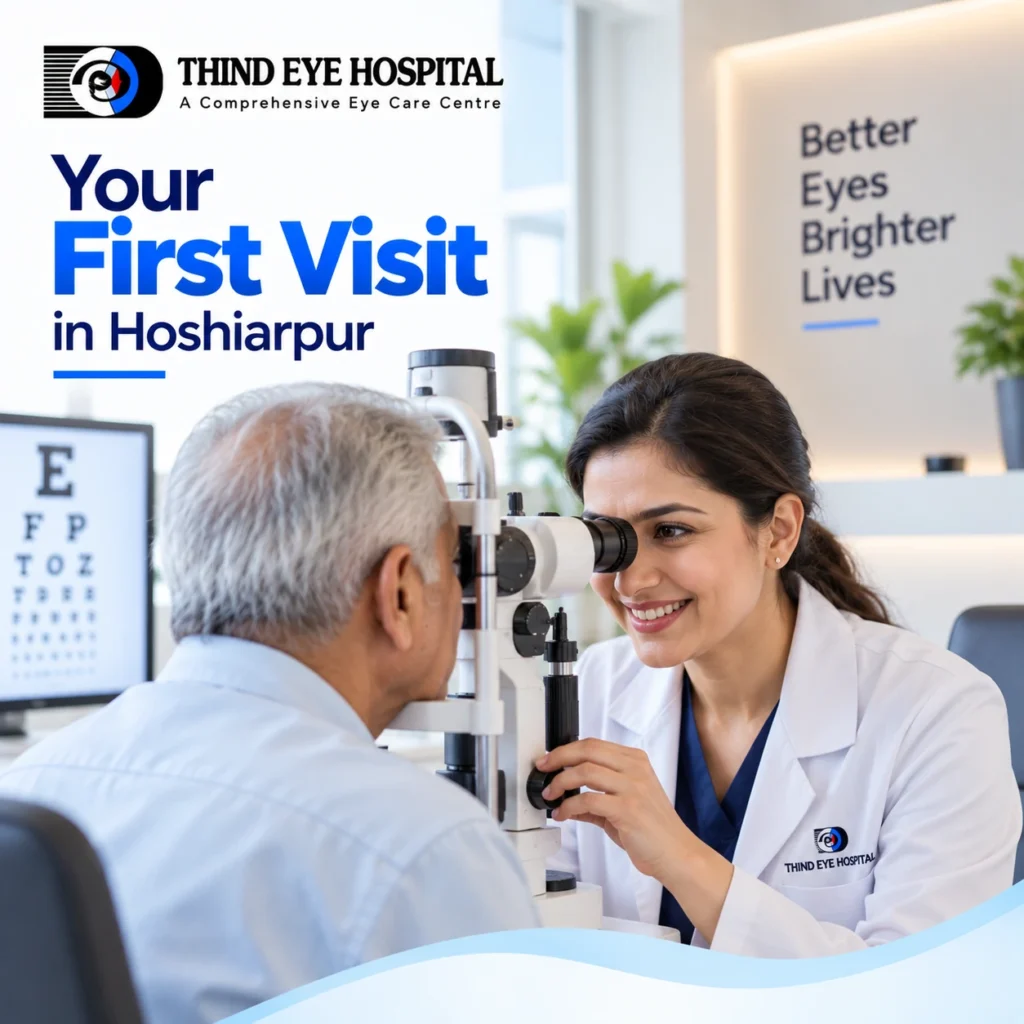
A first visit usually begins with your registration and an eye examination. A comprehensive eye examination assesses more than spectacle power.
It includes:
- Visual acuity
- Refraction
- Examination of the front of the eye
- Intraocular pressure
- A dilated retinal examination, where indicated
This helps your ophthalmologist understand your eye health and vision needs.
An ophthalmologist is a medical doctor specialising in eye care. An optometrist primarily provides vision testing and related eye care.
What Should You Bring?
For your visit to an eye hospital in Hoshiarpur, bring your current spectacles and any previous eye-related records you have.
It is also useful to note any changes you have noticed in your vision. These could include difficulty reading, frequent changes in spectacle power or other vision symptoms.
You can read more about the signs you need glasses before your visit.
How Often Should You Have an Eye Examination?
The right examination schedule depends on your age, symptoms and risk factors.
Adults with no symptoms and no risk factors are generally advised to have a comprehensive eye examination every one to two years. More frequent examinations are advised from age 40, when the risk of glaucoma and other conditions rises.
Some people need more regular examinations.
If You Have Diabetes
People with diabetes need a dilated retinal examination at least once a year, and sooner if advised, even when vision seems normal.
If Glaucoma Runs in Your Family
Anyone with a family history of glaucoma should be examined regularly from an earlier age. Glaucoma is often symptomless until advanced.
This is why choosing an eye hospital in Hoshiarpur for regular eye care can be useful even when your vision seems normal.
Common Vision Changes You Should Discuss
Not every vision change means you need the same type of care. A comprehensive examination helps identify what needs attention.
Presbyopia, the age-related loss of near focus, typically begins in the forties. It is a normal change rather than a disease.
Prolonged screen use is also associated with dry eye and eye strain because blink rate falls. Regular breaks, adequate lighting and correct working distance reduce symptoms.
Ultraviolet exposure is linked to cataract and pterygium. Sunglasses with proper UV protection therefore matter in the Punjab climate.
If you are visiting an eye hospital in Hoshiarpur because your vision has changed, mention when you first noticed the change and whether it affects particular activities.
What to Expect After a Dilated Eye Examination
A dilated retinal examination is performed when indicated. Dilating drops blur near vision and increase light sensitivity for several hours.
Because of this, it helps to arrange transport home after a dilated examination.
Planning this before visiting an eye hospital in Hoshiarpur can make your appointment easier, especially if you expect your pupils to be dilated.
The ophthalmologist will explain the findings from your examination and discuss the next steps relevant to your eye care.
Meet Your Eye Specialist in Hoshiarpur
Dr. Jaswant Singh Thind, Chief Eye Surgeon and Chairman cum Managing Director, consults at the Hoshiarpur branch on Thursday mornings.
He completed his MS in Ophthalmology from King George’s Medical College, Lucknow, in 1986, and founded Thind Eye Hospital in 1991.
Thind Eye Hospital was founded in 1991 and brings more than 39 years of expertise in eye care. It is a multi superspeciality eye hospital with branches in Jalandhar, Ludhiana, Hoshiarpur and Pathankot.
The hospital has also conducted community eye care camps for rural populations and school eye health checkup programmes for children.
For additional information about eye health, you can refer to the American Academy of Ophthalmology and the National Programme for Control of Blindness and Visual Impairment.
Plan Your Visit to the Eye Hospital in Hoshiarpur
If you are searching for the best eye hospital in Hoshiarpur, start with the practical details that matter for your visit.
Thind Eye Hospital, Hoshiarpur
Address: 584, Model Town, Near Hotel Presidency, Hoshiarpur 146001, Punjab
Landmark: Model Town, near Hotel Presidency
Opening hours: Monday to Sunday, 8:00 am to 6:00 pm
Phone: +91 87410 87510
Dr. Jaswant Singh Thind: Thursday mornings
You can also book an appointment before travelling to the branch.
If you are looking for an eye hospital in Hoshiarpur, call +91 87410 87510 to book a consultation at the Model Town branch and plan your visit.
“This article provides general information about eye health and eye care services. It is not medical advice and does not replace a consultation with a qualified ophthalmologist. Symptoms vary between individuals. Please consult a licensed eye specialist before acting on any information here.”