

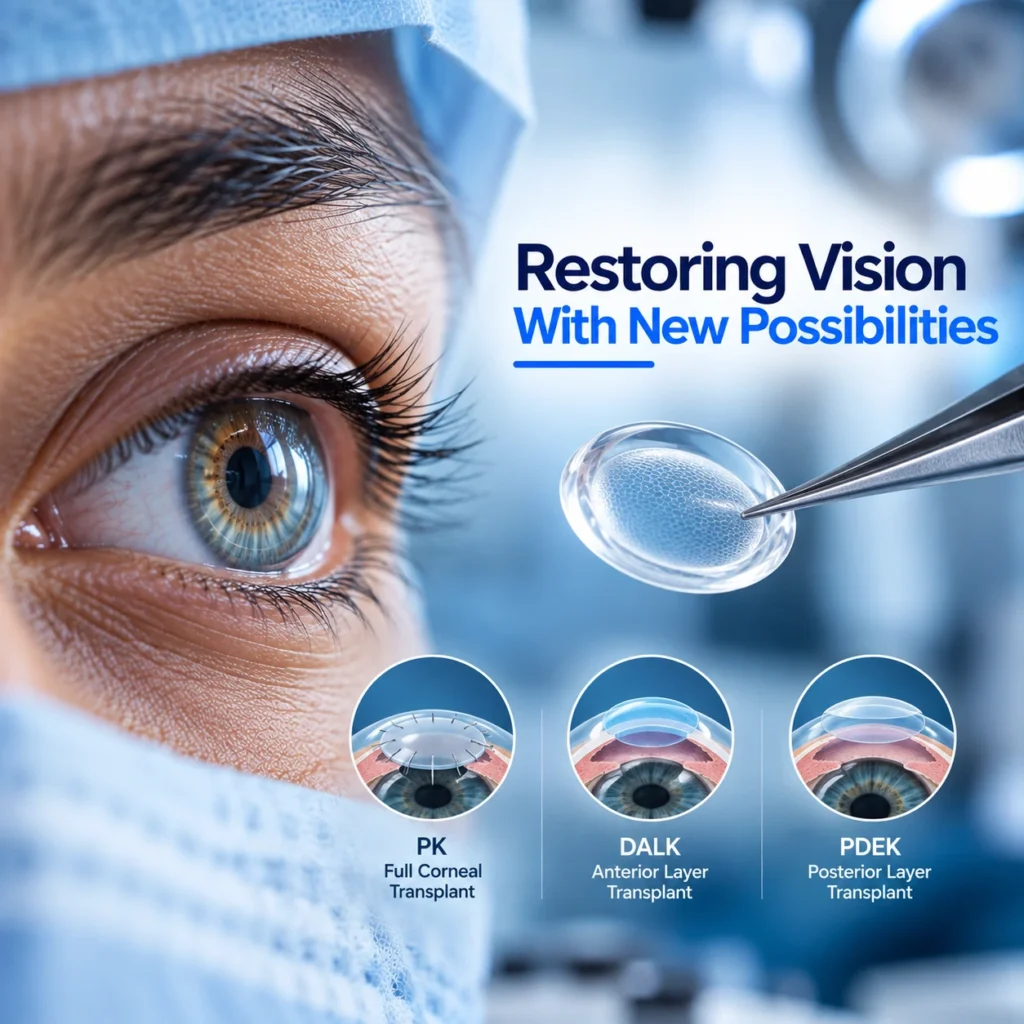
Corneal transplant in Ludhiana involves replacing damaged or affected corneal tissue with healthy donor tissue. Depending on the condition, the procedure may involve penetrating keratoplasty, DALK or PDEK. At Thind Eye Hospital, corneal transplant treatment is provided by a cornea and refractive surgery specialist after detailed assessment.
What is a corneal transplant?
The cornea is the clear front surface of your eye. Its shape and clarity determine much of the eye’s focusing power.
A corneal transplant replaces affected corneal tissue with donor tissue. The type of surgery depends on which part of the cornea is affected.
The main corneal transplant techniques listed for corneal transplant in Ludhiana include:
- Penetrating keratoplasty (PK), which replaces the cornea.
- Deep anterior lamellar keratoplasty (DALK), a lamellar technique that replaces affected layers.
- PDEK, another lamellar technique that replaces only the affected layers.
The term keratoplasty Ludhiana refers to these surgical procedures involving the cornea.
Why might you need corneal transplant in Ludhiana?
Several corneal conditions can affect vision or the clarity of the cornea. One example is keratoconus, a progressive thinning and bulging of the cornea.
Keratoconus usually starts in the teens or twenties. It can cause distorted vision and frequently changing spectacle power. Persistent eye rubbing is a recognised risk factor.
Not every patient with keratoconus needs a transplant. Other treatment options include collagen crosslinking, CAIRS and corneal ring segments in selected patients.
If you are searching for cornea transplant Ludhiana, a corneal examination is the first step towards understanding which treatment applies to your condition.
What are the types of corneal transplant in Ludhiana?
The surgical technique depends on the affected part and condition of the cornea.
Penetrating keratoplasty
Penetrating keratoplasty, or PK, is a corneal transplant technique that replaces the cornea.
DALK and PDEK
DALK and PDEK are lamellar transplant techniques. They replace only the affected layers of the cornea.
These techniques form part of corneal transplant in Ludhiana for suitable corneal conditions. Your cornea specialist will assess your eye before recommending a surgical approach.
The assessment is also important because conditions such as keratoconus have other treatment options. Collagen crosslinking, or CXL, is used to strengthen corneal tissue and slow keratoconus progression. It does not usually reverse changes already present.
What other corneal problems need specialist care?
Corneal care is not limited to transplantation. Some symptoms require prompt assessment, while other conditions have different treatment approaches.
Corneal ulcers
Corneal ulcers can follow injury, contact lens misuse or infection. Pain, redness, watering and a white spot on the cornea need same-day assessment.
A delay can cause permanent scarring. If these symptoms appear, seek eye care promptly instead of waiting for a routine appointment.
Pterygium
A pterygium is a fleshy growth on the surface of the eye. It is associated with exposure to sun, wind and dust.
It is removed surgically when it affects vision or causes persistent irritation.
Dry eye
Dry eye is a common tear-film condition. Symptoms include burning, grittiness, watering and fluctuating vision.
Management includes tear-film assessment, lubricants and lid hygiene. Treatments such as IDRA assessment and IRPL therapy are also included in modern management.
If allergy symptoms are also affecting your eyes, you can read about eye allergy treatment.
Who performs corneal transplant in Ludhiana?
For corneal transplant in Ludhiana, Thind Eye Hospital’s Ludhiana branch provides consultation with Dr. Diksha, Consultant Ophthalmologist, Cornea and Refractive Surgery.
Dr. Diksha specialises in cornea, cataract and refractive surgery, including LASIK, SMILE and PRK. Her experience includes corneal transplants such as PK, PDEK and DALK, along with collagen crosslinking and CAIRS for keratoconus.
Dr. Diksha consults at Ludhiana daily. You can read more about Dr. Diksha.
Thind Eye Hospital is a multi superspeciality eye hospital with branches in Jalandhar, Ludhiana, Hoshiarpur and Pathankot. The hospital was founded in 1991 by Dr. Jaswant Singh Thind, Chairman cum Managing Director.
For general eye health information, you can refer to the American Academy of Ophthalmology
Where can you get corneal transplant in Ludhiana?
Thind Eye Hospital’s Ludhiana branch is located at B-35, 958, M/5, Wood Stock Tower, Ferozepur Road, Ludhiana 141012, Punjab, opposite Wave Mall.
The branch is open Monday to Sunday, 8:00 am to 8:00 pm. For patients researching corneal transplant in Ludhiana, this provides a local option for consultation with a cornea specialist.
The hospital brings more than 39 years of expertise in eye care. It also conducts community eye care camps for rural populations and school eye health checkup programmes for children.
What should you do next?
If you are considering corneal transplant in Ludhiana, arrange a consultation with a cornea specialist. Your examination helps identify the condition affecting your cornea and the treatment options relevant to your eye.
You can visit the eye hospital in Ludhiana at Wood Stock Tower, Ferozepur Road, opposite Wave Mall.
Call +91 95940 50391 or book an appointment with Thind Eye Hospital.
For anyone searching for corneal transplant in Ludhiana, timely specialist assessment is the right starting point for understanding whether PK, DALK, PDEK or another corneal treatment is appropriate.
“This article provides general information about eye health and eye care services. It is not medical advice and does not replace a consultation with a qualified ophthalmologist. Symptoms vary between individuals. Please consult a licensed eye specialist before acting on any information here.”